
The Future of Skin Longevity: Science and Healthy Aging
From microneedling and laser therapies to peptides and regenerative medicine, scientists are increasingly treating skin aging as a biological process—not simply a cosmetic concern. Your skin remembers almost everything.
It remembers decades of sunlight exposure. It responds to chronic stress and inflammation. It reflects what you eat, how you sleep, whether you exercise, and how well your body repairs itself at the cellular level. Long before wrinkles appear, your skin is already aging biologically.
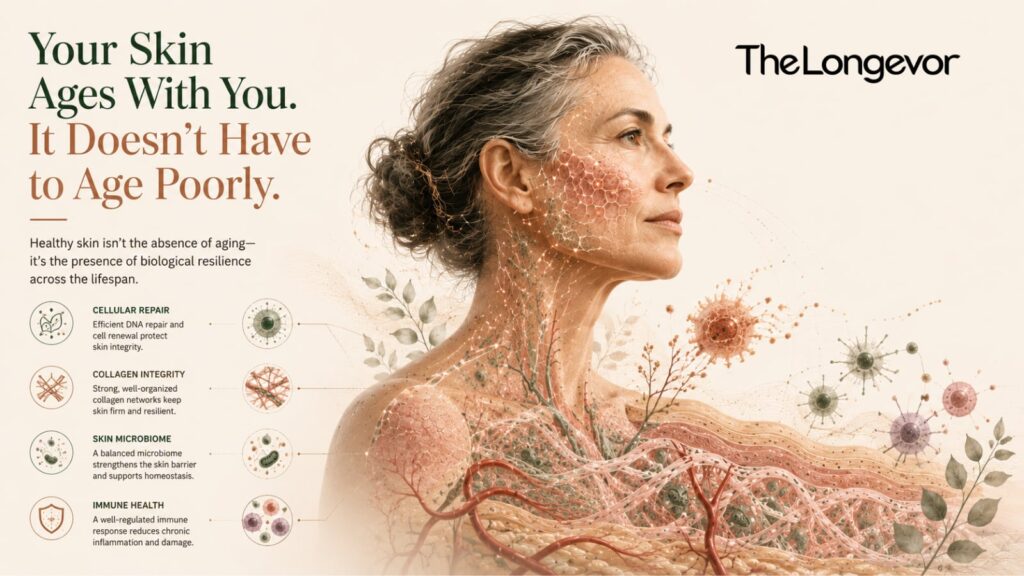
For decades, anti-aging skincare has largely focused on appearances—reducing fine lines, improving texture, and restoring radiance. But longevity science is reframing a much bigger question: what if healthy skin isn’t merely about looking younger, but preserving the biological processes that keep skin resilient throughout life? Increasingly, researchers are beginning to view skin as an organ of longevity.
The world’s largest organ serves as our first line of defense against environmental insults, regulates immune responses, participates in wound healing, and provides valuable insights into the body’s biological age. As longevity medicine evolves, the goal is shifting from masking the visible signs of aging to preserving the mechanisms that maintain healthy skin.
The future of skin longevity may have less to do with chasing youth—and more to do with supporting regeneration.
Why Does Skin Age?
Skin aging is often described as an inevitable consequence of time. In reality, it results from numerous biological processes occurring simultaneously.
Over time, skin undergoes both intrinsic aging—the natural aging process driven by genetics and metabolism—and extrinsic aging caused by environmental factors such as ultraviolet radiation, pollution, smoking, poor sleep, and chronic stress.
Several biological changes contribute to visible skin aging:
- Collagen production declines.
- Elastin fibers gradually lose their integrity.
- Cellular turnover slows.
- Chronic low-grade inflammation increases.
- Mitochondrial function becomes less efficient.
- Blood circulation and nutrient delivery decline.
- The skin’s ability to repair itself becomes progressively impaired.
These changes contribute to many of the features commonly associated with aging skin, including:
- Fine lines and wrinkles
- Loss of elasticity
- Dryness
- Uneven pigmentation
- Slower wound healing
- Thinning of the skin
- Reduced radiance and firmness
Importantly, these changes rarely occur in isolation. Skin aging reflects the health of multiple interconnected biological systems operating throughout the body.
The New Era of Skin Longevity
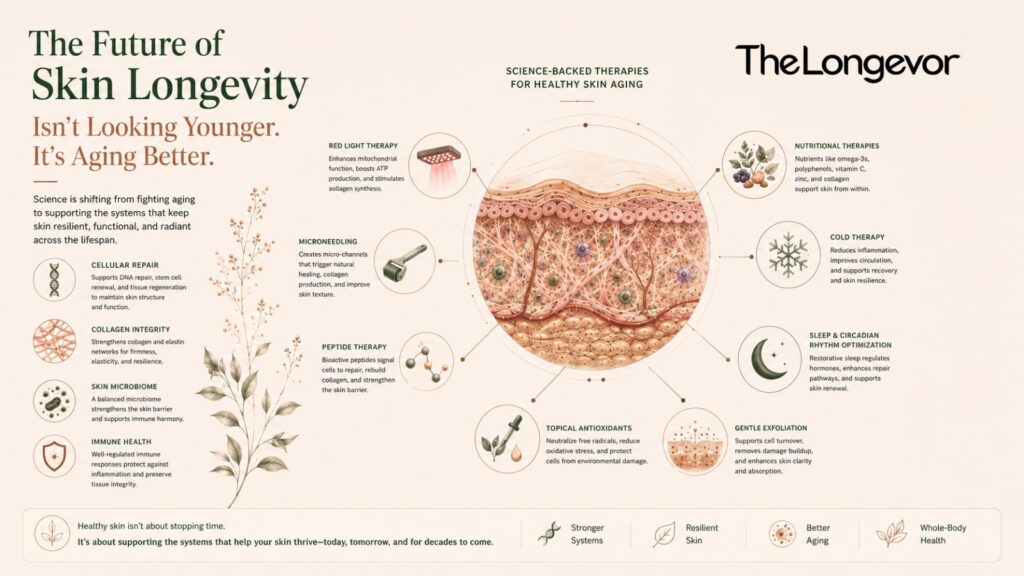
Modern skin treatments are increasingly designed to stimulate the body’s own regenerative capabilities rather than simply conceal visible changes. Many therapies work by activating pathways involved in collagen production, tissue repair, inflammation regulation, and cellular renewal.
Microneedling
Microneedling has become one of the most widely studied minimally invasive treatments for skin rejuvenation. By creating controlled microscopic injuries within the skin, microneedling stimulates the body’s natural wound-healing response. This process promotes collagen and elastin production while encouraging cellular renewal. Potential benefits include:
- Improved skin texture
- Reduction in fine lines
- Improvement in acne scars
- Enhanced collagen synthesis
- Better absorption of topical treatments
Rather than forcing the skin to appear younger, microneedling encourages it to repair itself.
Laser Therapies
Laser technologies have evolved considerably over the past two decades. Different laser treatments target distinct concerns, including pigmentation, vascular lesions, wrinkles, and acne scars. Fractional lasers, for example, create microscopic treatment zones that stimulate tissue remodeling while leaving surrounding skin intact. Laser therapies may help:
- Improve skin texture
- Stimulate collagen remodeling
- Reduce pigmentation
- Improve scar appearance
- Address signs of photoaging
Their effectiveness depends largely on selecting the appropriate technology for an individual’s skin type and clinical needs.
Chemical Peels
Chemical peels accelerate cellular turnover by removing damaged outer layers of skin. Depending on their depth, peels may improve:
- Uneven pigmentation
- Fine lines
- Acne
- Sun damage
- Skin texture
While chemical peels have existed for decades, they remain valuable tools when incorporated into individualized treatment strategies.
Platelet-Rich Plasma (PRP)
Platelet-rich plasma utilizes growth factors derived from a person’s own blood to support tissue repair and regeneration. PRP is frequently combined with microneedling and is currently being investigated across several regenerative medicine applications. Researchers continue to study its potential role in:
- Improving wound healing
- Supporting collagen production
- Enhancing skin quality
- Treating certain forms of hair loss
Although promising, treatment outcomes can vary considerably between individuals.
Beyond Dermatology: The Rise of Regenerative Skin Medicine
Perhaps the most exciting developments are occurring at the intersection of longevity science and regenerative medicine. Researchers are increasingly investigating how aging affects fundamental biological processes involved in maintaining healthy skin. Areas of active research include:
- Cellular senescence
- Mitochondrial health
- Peptide therapeutics
- Stem cell-derived technologies
- Extracellular vesicles and exosomes
- Oxygen-based therapies
- Precision nutrition
- Skin microbiome science
The goal is no longer simply cosmetic improvement. It is preserving the skin’s capacity for repair and resilience throughout aging.
Can Peptides Support Skin Health?
Peptides are short chains of amino acids that function as biological signaling molecules.
Certain cosmetic peptides are designed to stimulate collagen production or improve skin barrier function, while researchers continue to investigate therapeutic peptides across regenerative medicine. Some peptides may influence:
- Collagen synthesis
- Cellular communication
- Wound healing
- Inflammatory responses
- Tissue repair mechanisms
However, peptide science remains a rapidly evolving field. While some peptide-based therapeutics are supported by robust clinical evidence, others remain experimental. Separating scientific evidence from commercial enthusiasm remains essential.
Hyperbaric Oxygen Therapy and Skin Repair
Hyperbaric oxygen therapy (HBOT) involves breathing concentrated oxygen under increased atmospheric pressure. Clinically, HBOT has established applications in wound healing and certain medical conditions. Researchers are also exploring its potential influence on tissue oxygenation, inflammation, and regenerative processes relevant to healthy aging.
Because skin is highly dependent on adequate oxygen delivery and vascular function, improving tissue oxygenation represents an intriguing area of investigation. Much remains to be understood regarding its role in longevity medicine, but it reflects a broader trend toward supporting the biological processes that maintain tissue health.
The Treatments We Often Overlook
The most powerful interventions for healthy skin are frequently the least glamorous. Scientific evidence consistently supports the importance of:
- Sleep
- Regular physical activity
- Balanced nutrition
- Protein intake
- Smoking cessation
- Stress management
- Sun protection
- Maintaining metabolic health
Skin is remarkably responsive to systemic health. Poor sleep increases inflammation. Ultraviolet radiation accelerates collagen degradation. Metabolic dysfunction influences wound healing and skin barrier integrity. No cosmetic procedure can fully compensate for chronic biological stress.
Which Treatment Addresses Which Concern?
| Primary Concern | Potential Approaches |
| Fine lines | Microneedling, retinoids, selected laser therapies |
| Acne scars | Fractional lasers, microneedling, chemical peels |
| Pigmentation | Chemical peels, selected laser treatments |
| Skin texture | Microneedling and collagen-stimulating procedures |
| Skin barrier support | Appropriate skincare and nutritional interventions |
| Wound healing | Medical evaluation and evidence-based regenerative approaches |
| Overall skin longevity | Lifestyle optimization combined with individualized treatments |
Importantly, no single intervention addresses every aspect of skin aging. Healthy skin emerges from the interaction of multiple biological systems rather than any individual treatment.
What We Still Don’t Know
Despite rapid advances, important questions remain unanswered. Researchers continue to investigate:
- How biological age influences treatment outcomes
- Whether regenerative therapies can meaningfully improve skin resilience over decades
- The role of cellular senescence in skin aging
- How the skin microbiome changes throughout healthy aging
- Whether personalized longevity interventions will become part of routine dermatological care
Many emerging therapies remain experimental and require further clinical validation. Scientific progress often moves more slowly than marketing claims.
The Future of Skin Longevity
The future of skin health is unlikely to be defined by a single breakthrough treatment. Instead, longevity medicine is pointing toward a more integrated approach—one that combines regenerative science, lifestyle interventions, precision medicine, and individualized care.
Scientists are increasingly recognizing that healthy aging is not simply the absence of disease. It is the preservation of biological function. The same principle applies to our skin.
Rather than asking how we can make skin appear younger, researchers are beginning to ask a more fundamental question: How can we preserve the biological processes that keep skin resilient throughout life? The answer will likely involve far more than creams and cosmetics.
Conclusion
Our skin tells the story of how we age.It reflects our environment, metabolism, inflammation, and our capacity for repair. Understanding that story requires moving beyond the traditional language of anti-aging and toward a more nuanced view of skin longevity.
The future of healthy skin may not lie in reversing time, but in supporting the remarkable biological systems that have been preserving us all along.
Longevity science reminds us that aging is not a process occurring in isolated organs. It is a conversation taking place throughout the body—and our skin is one of its most visible participants.