
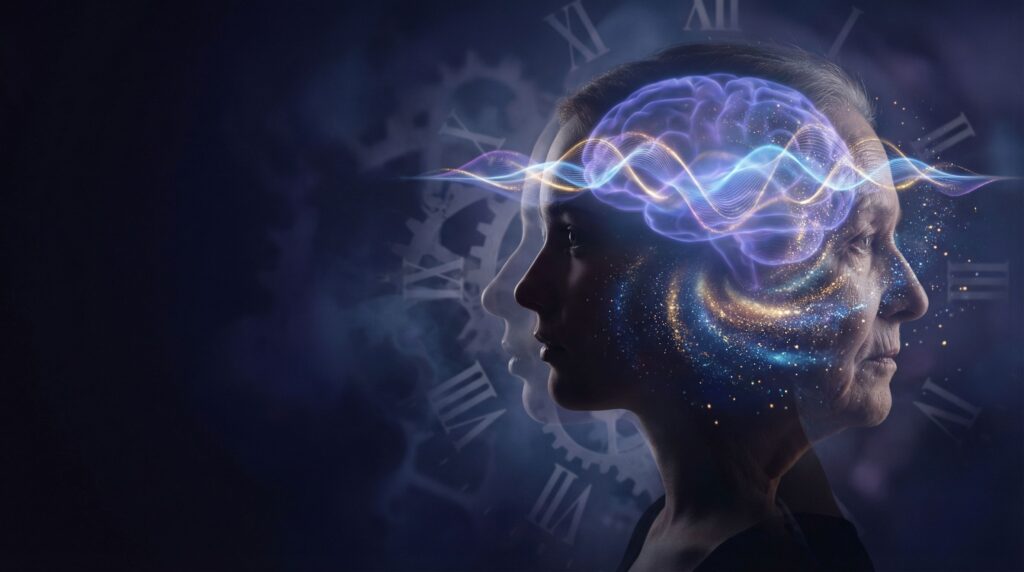
Brain Waves Reveal Your True Biological Age Beyond 8 Hours
We’ve all heard the standard advice: Get more sleep. But according to a groundbreaking 2026 study from UCSF and Beth Israel Deaconess Medical Center, how much you sleep matters far less for your longevity than how your brain behaves while you’re under.
Using machine learning to analyze the sleep data of 7,000 participants, researchers have pioneered a new metric: Sleep Brain Age.
The 10-Year Warning
The study found that our chronological age (the years on our ID) and our Brain Age (the health of our neural oscillations) often tell two different stories.
- The Risk: For every 10 years your brain looks older than you actually are during sleep, your dementia risk surges by 40%.
- The Protection: If your brain waves look younger than your age, your risk drops significantly.
The Micro-Secrets of Deep Sleep
The AI didn’t care about how long people slept. Instead, it looked at the microstructure of the night. Two key features stood out:
- Sleep Spindles: These tiny bursts of fast-frequency activity are the brain’s way of saving memories and clearing out neural debris.
- Kurtosis: Sudden spikes in brain activity that, surprisingly, seem to act as a protective buffer against cognitive decline.
This research shifts sleep from a lifestyle habit to a diagnostic tool.
The Action Plan: In the near future, wearable tech (like smart headbands or rings with advanced sensors) will likely give you a Brain Age score every morning. To keep that score low:
- Manage Sleep Apnea: Oxygen deprivation is a primary driver of rapid brain aging.
- Prioritize Quality: Conditions that foster deep-stage Delta waves and Sleep Spindles such as consistent cool temperatures and avoiding alcohol before bed are a direct investment in your cognitive odometer.